
by Stephanie Swanson
“I’m okay with half of you.”
Though this comment likely wasn’t intended to land the way it did, those six words reinforced what I had spent the last eight years working to undo. Eight years ago, through intentional hard work, therapy, and inpatient treatment, I began my journey of recovery from an eating disorder. If you know anything about eating disorders, you know they aren’t really about food. They are about what food and movement are covering up.
For me, my eating disorder silenced my voice.
It kept me pleasing to those around me. It kept me in church environments that didn’t want to hear the truth. It kept me safe. And, most importantly, it allowed me to belong. As I began to unravel the function of my eating disorder, I began to find my voice. What I didn’t realize was that I would also discover that my faith community, a place I was deeply committed to, didn’t know what to do with a woman who had one.
“We all belong” was the tagline at my church. But underneath that was something very different. You belong if you don’t ask questions. You belong if you agree with the pastor. You belong if you turn a blind eye to misconduct and abuse. You belong if you serve at the sacrifice of yourself. You belong if you don’t have emotions. You belong if you don’t take up too much space—especially if you are a woman. And so for years, I reveled in that belonging. It gave me purpose, identity, and a community of people I loved and cared for.
But as I began to unravel how my eating disorder helped me navigate my daily life, I realized it had also allowed me to stay in systems that profited from my compliance and silence. My faith community was one of those systems. Conditioned by this since a child, I had subconsciously chosen to be in the same type of system as an adult. For years, my eating disorder helped me belong in a system I believed was helping me. So as I found healing, I began to realize something incredibly painful: the church was no longer helping me become whole, it was asking me to become smaller.
I was placed in a position of leadership within the church while I was still in the beginning stages of recovery from my eating disorder. I was healthier, but I was not whole. As I began to realize and put into practice what it meant to be my whole self, I realized I was at a crossroads. I could allow the old patterns that once kept me safe to numb me enough to stay quiet, or I could speak up when things were not okay within the church.
So I began to speak.
I brought attention to things that had been swept behind closed doors for a decade. Over time I began to realize this was a threat to the church, not because I was angry or demeaning, but because I was asking questions, speaking truth, seeking accountability, and pursuing justice. I had spent years learning that my voice was part of my whole self and yet, within the church I was learning that belonging had conditions.
To belong means you don’t speak about the finances that are unethical. You don’t question misconduct that pastors are engaging in. You don’t name abuse when leaders would rather look the other way. You don’t make the system uncomfortable. You stay quiet. You make yourself smaller. That is how you belong.
Over those few years when I was in leadership, my personal healing became a threat to the church, both locally and denominationally. None of this came from a desire to tear anything down. I was trying to live out what I believed the church should be about: truth, accountability, justice, and care for people. And yet I came to realize that my whole and healthy self no longer fit inside the box the church wanted its congregants and its leaders to occupy.
What I began to realize was that we all belong if we all agree to stay silent enough to protect the system.
But I had not gone through the intense and difficult journey of recovery to return to the behaviors that allowed me to stay silent and appease the dysfunctional church systems. Eventually there came a moment where I had to choose. I could choose belonging, or I could choose my whole self. So when I brought that choice to my relationships, some I had known and loved for decades within the church, and they told me they were okay with half of me, that is when I had clarity. I no longer wanted to belong somewhere that required me to be half of myself.
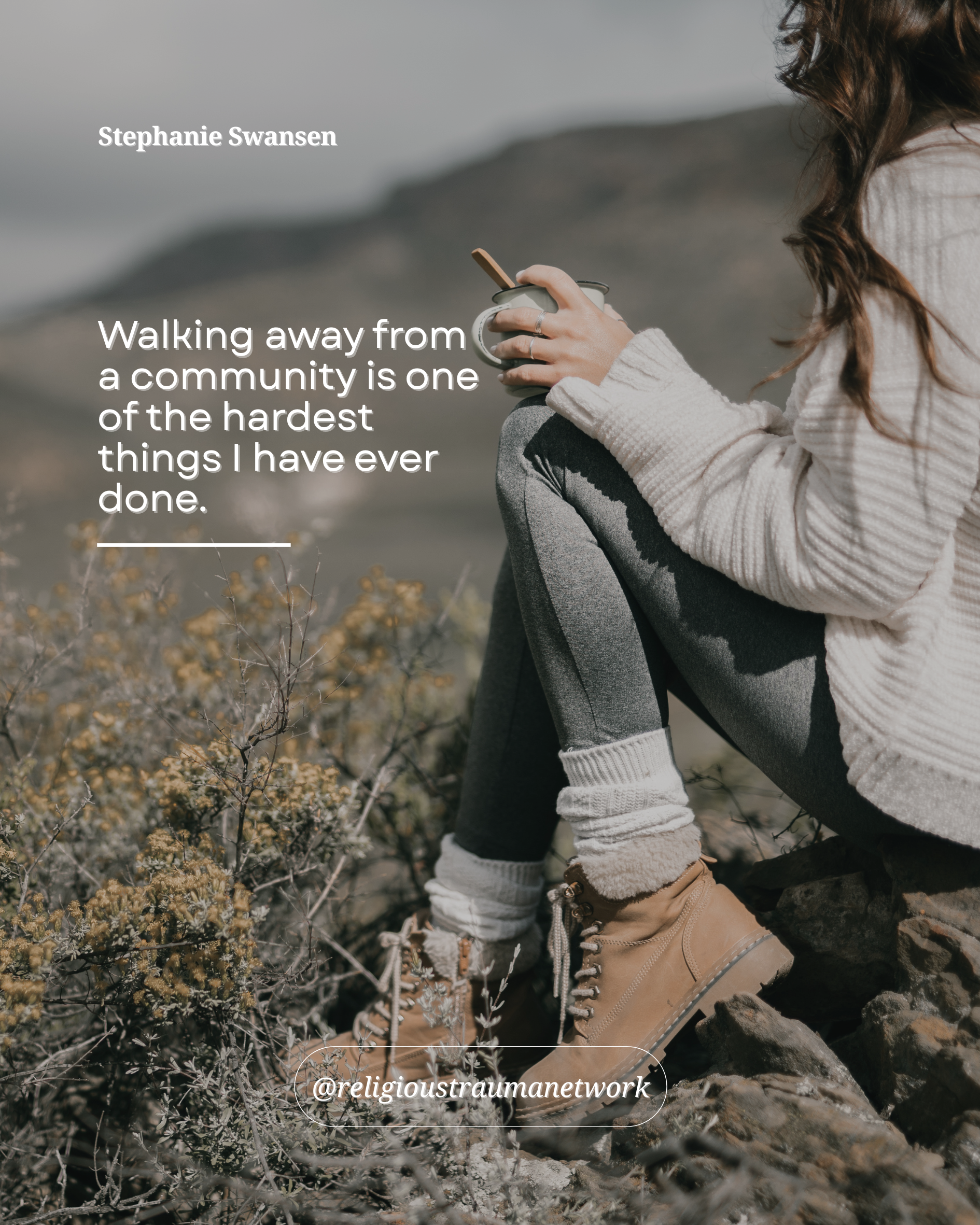
Walking away from a community is one of the hardest things I have ever done. This was a community that cared, a community that was formative in my children’s lives, a community that desired to do good in the world. There were people there I deeply loved and still do. But if misconduct and abuse exist within its walls only when everyone agrees to stay silent, then I had to choose the most difficult thing I have ever chosen. I had to choose my whole self over belonging.
Others may be okay with half of me, but I no longer am.
About the Guest Author:
My name is Stephanie Swanson. I’m a wife, mom of three, and nurse from the Midwest whose faith has evolved over the years. I’ve come to believe that the way we live—through honesty, justice-seeking, vulnerability, and compassion—can shape the next generation and help our children grow into people who embrace authentic inclusion. When I’m not cheering on my kids in their extracurriculars, you can usually find me reading a good book with a cup of coffee, running, or baking my grandfather’s secret chocolate chip cookie recipe.
Disclaimer:
The views, thoughts, and opinions expressed in guest blog posts are those of the individual authors and do not necessarily reflect the positions of the Religious Trauma Network. We recognize that each person’s healing journey is unique, personal, and courageous. The stories shared here belong solely to the contributors, and their experiences, perspectives, and advice may not apply to everyone. We encourage readers to honor their own paths and seek professional support as needed.