
The Church in the Backyard
by Lori Williams
The kids were down for their naps when the phone rang.
I’d been emailing the pastor for a few weeks — careful emails, the kind you write when you’re not sure you deserve to take up space. I was trying to make sense of what had happened to us at our previous church. Trying to understand if what I remembered was real, if what I felt was justified, if maybe I was the problem after all. He had offered to talk it through with me. I was grateful in the way you’re grateful when someone throws you a rope.
He walked me through scripture. He named what had been done to us. He said it clearly: it wasn’t your fault. You did the right thing. I don’t think I realized until that moment how long I had been waiting for someone to say that. Someone with authority. Someone the system recognized as close to God.
And then he said something else.
He told me he felt a special connection with me. That he’d felt it with a few people over the years, but with me it was stronger. I remember the feeling that moved through me — something like amazement, something like relief, and underneath both of those, something quieter that I didn’t have words for yet.
Someone like me mattered to him.
I was adopted. I have carried that fact my whole life the way you carry something you’re not sure is a gift or a weight — sometimes both at once. The oldest question of my life has never really been theological. It’s been simpler and harder than that: do I belong? Am I wanted? Is this permanent?
His church was called Covenant.
It sat in the backyard of the house my parents brought me home to as a baby.
I thought it was a sign. I thought God was restoring the years the locusts had eaten. I thought: here is the spiritual father I never had. Here, finally, is where I belong.
I was wrong about what was being offered. But I was not wrong about what I needed.
The Seal
The emails became phone calls. The phone calls became a visit.
I don’t know how to explain what it feels like to have spent most of your life believing, somewhere beneath everything, that you are fundamentally bad. Not misbehaving. Not struggling. Bad. The kind of bad that doesn’t have a clear origin story, that just lives in you like a low hum you’ve stopped noticing because it’s always been there.
He hugged me and looked me in the eyes and said I love you. There were tears.
He told me I would be delivered.
I thought it was a miracle. I thought God had finally sent someone to find me in the place I’d been hiding — that quiet inner room where I had always believed the worst about myself — and call me out of it. He was going to be my spiritual father. The role had been empty my whole life, and here was a man of God, standing in my home, weeping, telling me I was loved.
I felt worthy.
I felt good.
Those two words don’t capture what that meant after a lifetime of feeling the opposite. But they’re the truest words I have.
I didn’t know yet that what I was feeling was not healing. It was bonding. And bonding to someone who needs to be needed — who needs to be your hero, your answer, your miracle — is not the same thing as being loved. It took me years to understand the difference. It took me watching him do it to an entire church.
What I Thought Was Love
For ten years, we talked every day.
I want you to understand what that means — not the phone calls themselves, but what they represented. He was the first thing in my life that felt like consistent, reliable presence. Every day he was there. Every day he asked about my life. Every day I had somewhere to put the weight I was carrying.
I was carrying a lot. Things I had never told anyone. I had begun to trust him with the oldest, darkest rooms in my story — the ones I kept locked even from myself. He was going to help me work through it. He had the authority, the compassion, the tears. He had told me he loved me.
And then one day he told me he cared for me in ways that weren’t pastoral.
Something in me recognized it immediately. Not with my mind — my mind scrambled to make sense of it, to explain it away, to find the version of this that was still safe. But my body knew. There was a sick, sinking feeling that I had felt before, in a different life, with different hands.
I had just asked him if he would adopt me. I had named out loud, for the first time, exactly what I needed: a father. Someone who would claim me. Someone permanent.
His answer was not that.
I don’t know how to explain what happened inside me in that moment except to say that for someone who learned early that love and harm could wear the same face, the line between them can become very difficult to find. I didn’t leave. I didn’t name what had happened. I filed it in the same drawer where I kept everything else I didn’t have words for yet, and I kept answering the phone.
Because it still felt like the closest thing to belonging I had ever found.
What Was Left
Ten years later I watched him work quietly behind the scenes to undermine the man who had replaced him. The control hadn’t retired when he did. It had just found new expression.
And something in me finally saw it clearly.
Not with anger first — with recognition. The way you recognize a pattern you’ve been living inside so long you thought it was just the shape of the world. I saw what he had needed. I saw how I had provided it. I saw the decade of daily phone calls for what they were — not spiritual fathering, not healing, not covenant. A man who needed to be needed, and a woman who had never stopped needing to belong, finding each other in a system that called it holy.
I was shattered when it became clear. Barely holding on. I told myself God would bring good out of it — that doctrine I had carried so long, the one that says suffering is ordained, that the harm done to you is somehow part of a plan to make you better. It took time, but I let that go too. I couldn’t keep handing my pain to a theology that required me to make meaning out of what had simply been wrong.
What I found underneath, slowly, was something I hadn’t expected.
My body.
I had lost my connection to it so gradually I hadn’t noticed it leaving. And when I found my way back — through years of slow, unglamorous work — I found that the thing I had been searching for in a pastor’s validation, in daily phone calls, in a church named Covenant in my childhood backyard, had been there the entire time.
Not in a building. Not in a man with tears in his eyes. Not in doctrine or scripture or someone else’s authority.
In me. Moving through me. The one connection that had always been mine and that no one had ever been able to take — only cause me to forget.
I had looked for God in a man who needed to be my God.
He was never there.
But I am.
Note: This piece was written in collaboration with an AI writing partner, Claude (Anthropic), who asked the generative questions that helped excavate the material. The words, memories, and story are entirely the author’s own.
About the Guest Author:
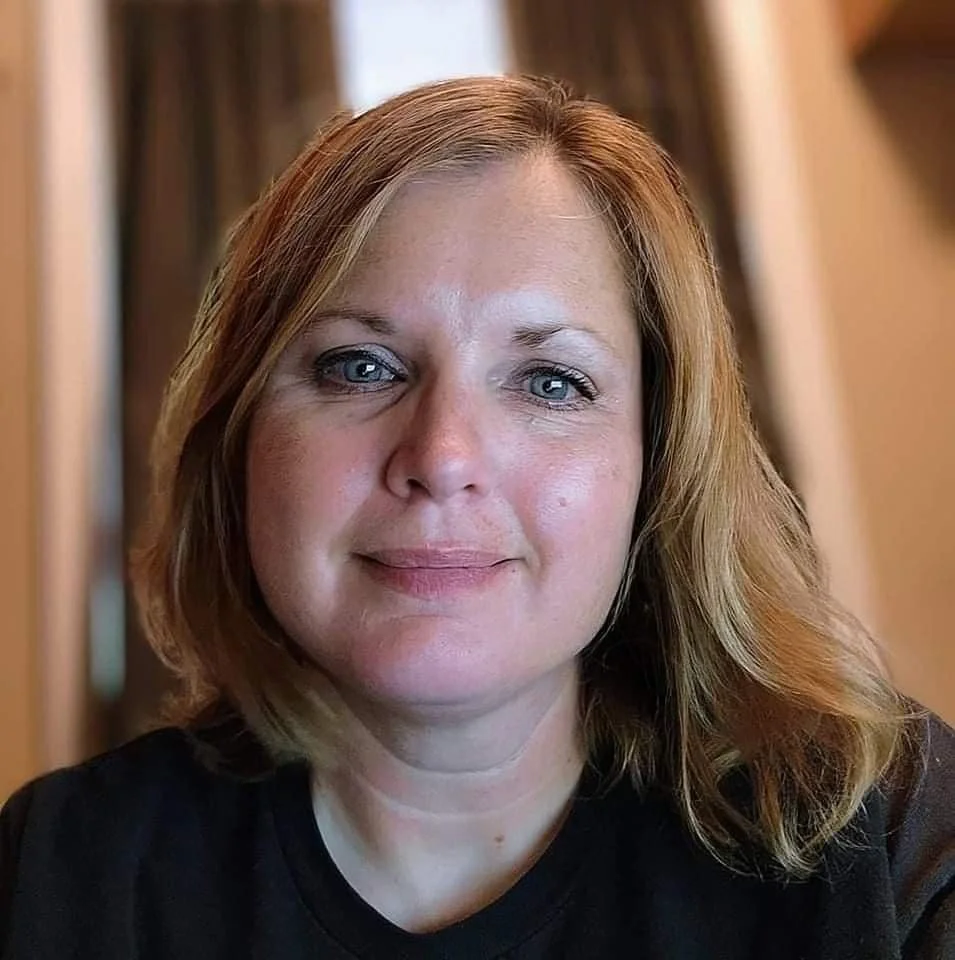
Lori is a Certified Trauma Care Practitioner (CTCP) based in Tennessee. For more than four years, she has walked alongside others in their healing with steadiness, compassion, and deep respect for their stories. Her work is shaped by her own lived experience of religious trauma, adoption, and the long journey of coming home to herself. Lori is passionate about creating space where people can reconnect with their voice, their body, and their sense of belonging.
Disclaimer:
The views, thoughts, and opinions expressed in guest blog posts are those of the individual authors and do not necessarily reflect the positions of the Religious Trauma Network. We recognize that each person’s healing journey is unique, personal, and courageous. The stories shared here belong solely to the contributors, and their experiences, perspectives, and advice may not apply to everyone. We encourage readers to honor their own paths and seek professional support as needed.