
My Body Knew Before I Did: Somatic Healing After Religious Trauma
by Lori Williams
For most of my life I thought I had a stomach problem. The tightness. The swallowed air pressing up into my throat. The sounds my body made that I couldn't explain and couldn't stop. I took Pepcid. I tried eating slower. I blamed what I'd eaten for dinner. It would be decades before I understood that my stomach wasn't the problem. My nervous system was doing exactly what it was designed to do — keep me safe. Scanning the environment constantly for threats, giving me very few opportunities for rest.
What the Body Learns Early
I didn't grow up in the church. But I grew up in the Deep South, where religion felt heavy in the culture like humidity — you didn't have to go to church to experience it. And long before I ever sat in a pew, my body was already learning how to survive.
I was adopted as an infant into a family who appeared healthy and happy from the outside. What happened inside those walls taught me early that love could be conditional, that safety was never guaranteed, and that the best strategy was to hide in my room and stay small, stay quiet, and keep others from getting upset.
My stomach was my first alarm system. Long before I had words for what I was feeling, my body was keeping score — tight, distended, pressing up into my throat in rooms where something was wrong but no one was saying so.
I became very good at reading the temperature in the room. The expressions on people's faces. Did they smile or look away? Did they seem frustrated or upset? Hypervigilance dressed itself up as insight. I didn't know then that what I was experiencing had another name, and that it would be the catalyst to lead me straight through the church doors years later.
Peter Levine, in his work on somatic healing, describes how the nervous system responds to threat the way any animal does — through fight, flight, or freeze. When none of those options feel safe, the body holds the energy of the threat inside itself. For a child with nowhere to go and no way to fight, that energy has to live somewhere. It lived in my stomach.
Why Someone Like Me Thrives in a Religious Environment
Someone like me thrives in a religious environment. I understand that now. A child who grew up believing love was conditional, who never quite felt like she belonged anywhere, who was always working to earn her place — that child walks into a room where she is told she matters, that her slate has been wiped clean, that she is chosen and loved unconditionally, and her nervous system floods with relief.
I still remember the first Sunday I walked into church as an adult. I was careful about what I wore. Making sure I didn't show too much of my legs. The shame I carried in my body from things that had been done to me had already taught me to take up as little space as possible. And for someone who is tall, that can be a challenge when it comes to dresses! But inside those walls something shifted. Older members of the choir smiled at me like they meant it. Singing together made me feel like I was a part of something. And when the pastor spoke about a God who wasn't holding my sins against me — something in my stomach loosened for the first time in as long as I could remember.
But belonging is a powerful and necessary need. And a nervous system that has been starved of safety cannot always distinguish between water that nourishes and water that poisons. It only knows that the thirst is ending. It brings to mind the plants in my daughter's room that she forgot to water. How they instantly perked up when liquid hit the soil — they would have responded the same way if I'd poured in water laced with toxins. When you are thirsty enough, you'll drink anything to quench your thirst.
Years later I found myself knocking on a pastor's office door looking for answers. I still remember what I felt in my body in that moment. Hopeful energy flooded through me. He welcomed me like I mattered. And for someone who had spent a lifetime wondering if she did, that feeling was everything. What I didn't know yet was that the relief I felt was real — but the water wasn't clean. It would take me the better part of a decade to understand what I had been drinking.
What We Were Taught About Our Bodies
The theology I absorbed didn't have much good to say about the body. I was taught that my heart was deceitful. That my body was a temple I was failing to honor. That when things went wrong the first place to look was inward — what sin had I left unconfessed, what had I done to grieve the Holy Spirit. Every difficulty became a spiritual audit.
What I know now is that this kind of theology falls very differently onto a body that is already full of shame. I didn't come to church as a seeker just looking for answers. I came carrying wounds I hadn't chosen and guilt I hadn't earned, believing I was bad. And the message that my heart couldn't be trusted, that my instincts were suspect, that the answer to everything bad I felt was more prayer, perfect performance, and more surrender — that message didn't heal what I was carrying. It just kept me in a toxic cycle.
When the pain surfaced — and it always surfaced — the solutions offered were spiritual ones. Pray more. Read your Bible more. Trust God. Submit. What I needed was just someone who could hold space for me. Someone who wouldn't judge or fix or tell me God was using my pain for his glory. But in an environment where prayer requests sounded a lot like gossip, the quiet but persistent message I received was that if I was struggling it was because my faith wasn't strong enough or I had sin in my life. My body knew that wasn't true. But I had spent a lifetime being taught not to trust what my body knew.
The Long Way Home
Getting free didn't happen in a moment. It happened with my therapist over five years of slow, tiring but hopeful work. It happened in the years after that, when I began to trust my own feet under me. It happened in the people who stayed — not because they had all the answers, but because they had been through hard things themselves and didn't try to hand me a bandaid and a Bible verse.
There were others who couldn't understand why we didn't just forgive and move on. Their encouragement to let it go, to remember that nobody's perfect, felt like being handed a bandage for a wound that needed surgery. They meant well. But meaning well and being able to hold someone's real pain are two very different things. What made the difference in my life were the people who had sat in their own darkness long enough to stop being afraid of mine.
What Safety Actually Feels Like

PC @ Lori Williams
I know what genuine nourishment feels like now because I have felt it. It feels like a cousin in Newfoundland who messages with me most mornings just to share his life — stories of ancestors and ocean and a land that somehow I already knew deep in my soul. It feels like sitting across a table from someone, cup of coffee in hand, on a regular basis — someone who shares their sorrow and their joy and makes room for mine. It feels like standing on rocky cliffs above an ocean that my body recognized before my mind did. Something in my DNA whispered — this is home.
What I didn't know as a child hiding in my room was that the ocean I escaped to in my mind wasn't random. My nervous system was reaching toward something real — a place and a people I actually came from. Dissociation gets a bad reputation. But sometimes the places we flee to in our minds are telling us something true about what we need.
Learning to trust my body again has been the hardest work of my life. Not because my body was untrustworthy — but because I had spent decades being taught to override it, spiritualize it, or just hide it. The stomach that growled and tightened and pressed up into my throat was never lying to me. It was speaking the only language it knows. I just needed to learn how to listen.
To the Person Reading This
If you are reading this and something in your body is responding — a tightness, a familiarity, a heaviness you can't quite name — I want you to know that your body is not broken. It is not faithless. It is not bad. It has been doing the most faithful thing a body can do. It has been telling you the truth, in the only language it knows, for as long as you have been alive. The work of healing is not learning to silence it. It is learning, slowly and with great patience, to finally listen to what it has to say.
Finding Your Way Back
Healing hasn't come for me all at once or from one source. It continues to come slowly over time through acceptance and self-compassion and the realization that I'll always be in a process of healing.
Healing comes through writing honestly — just for me, without judging myself. From showing up in spaces where people are curious rather than prescriptive, willing to share their own stories without an agenda. From the therapist who helped me understand what was actually happening inside me to peer support who have provided insight through sharing their own stories. From books and podcasts and training that gave me language for experiences I had carried wordlessly for decades.
It came from slowing down enough to notice. A bird singing outside my window. Daffodils coming up in early spring. The colors of a sunset I almost walked past. My phone became an unlikely tool for presence — pausing to capture a moment taught me to actually be in it. My nervous system learned that safety was possible when I was intentional about slowing down and paying attention.
It came from listening to the younger parts of me that were still waiting to be heard. When I slow down and ask her what she needs — really ask — the answer is always simple. A hug. Someone to listen. Someone to say you matter. Every time I offer her that, something in my body releases just a little more.
If you are wondering where to start, I would say this: find one person willing to share a cup of coffee and their real life with you. Not to fix you. Not to pray over you. Just to sit with you. That kind of witness — simple, unhurried, mutual — is some of the most powerful medicine I know. A good therapist can help you understand what your body has been carrying. A peer who has walked through their own hard things can help you feel less alone in carrying it. Both matter. You deserve both.
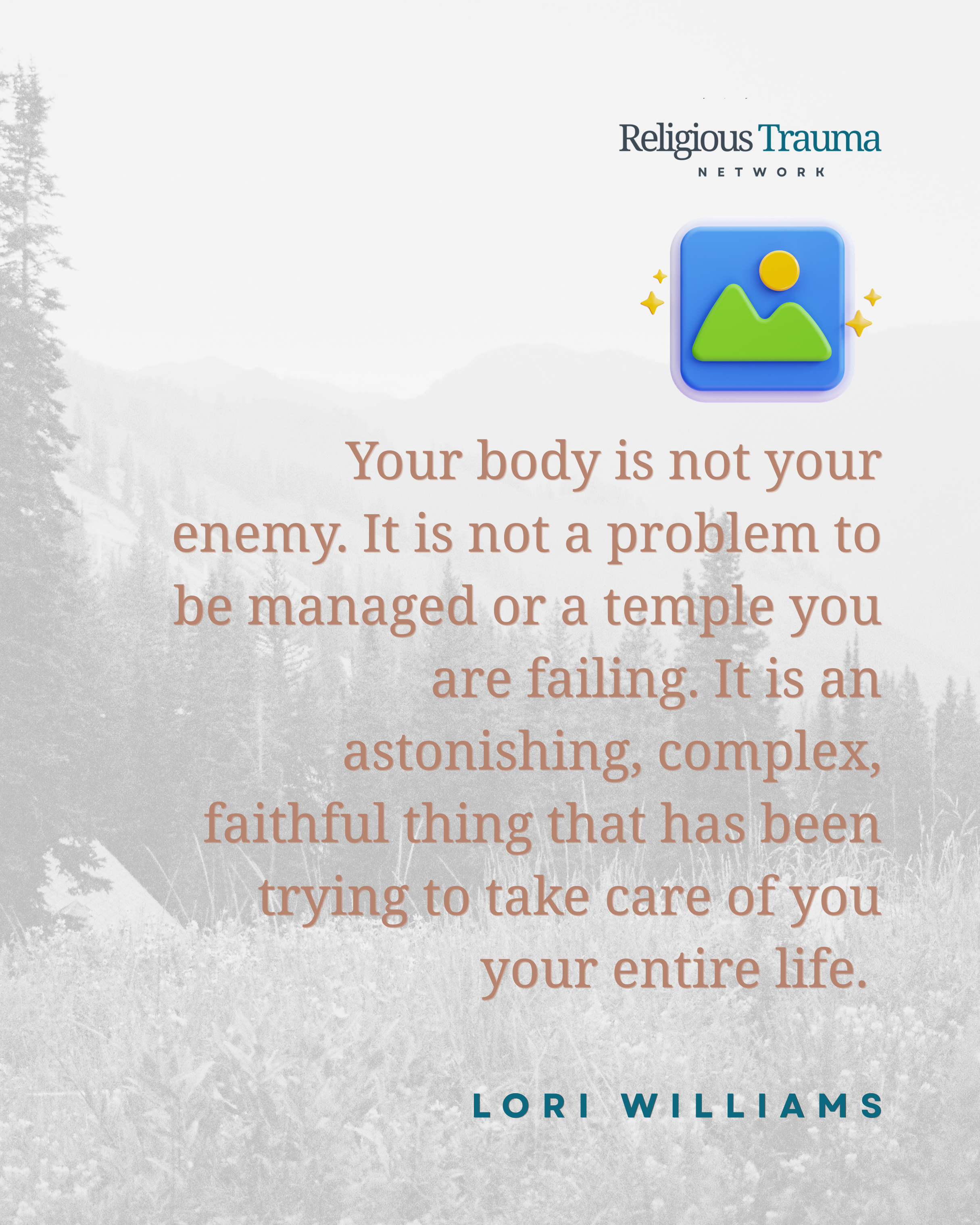
And if no one has ever told you this — your body is not your enemy. It is not a problem to be managed or a temple you are failing. It is an astonishing, complex, faithful thing that has been trying to take care of you your entire life. Learning to know it, to listen to it, to move toward what genuinely nourishes it — that is not weakness. That is the work. And you are already doing it, or you wouldn't be here.
About the Guest Author:
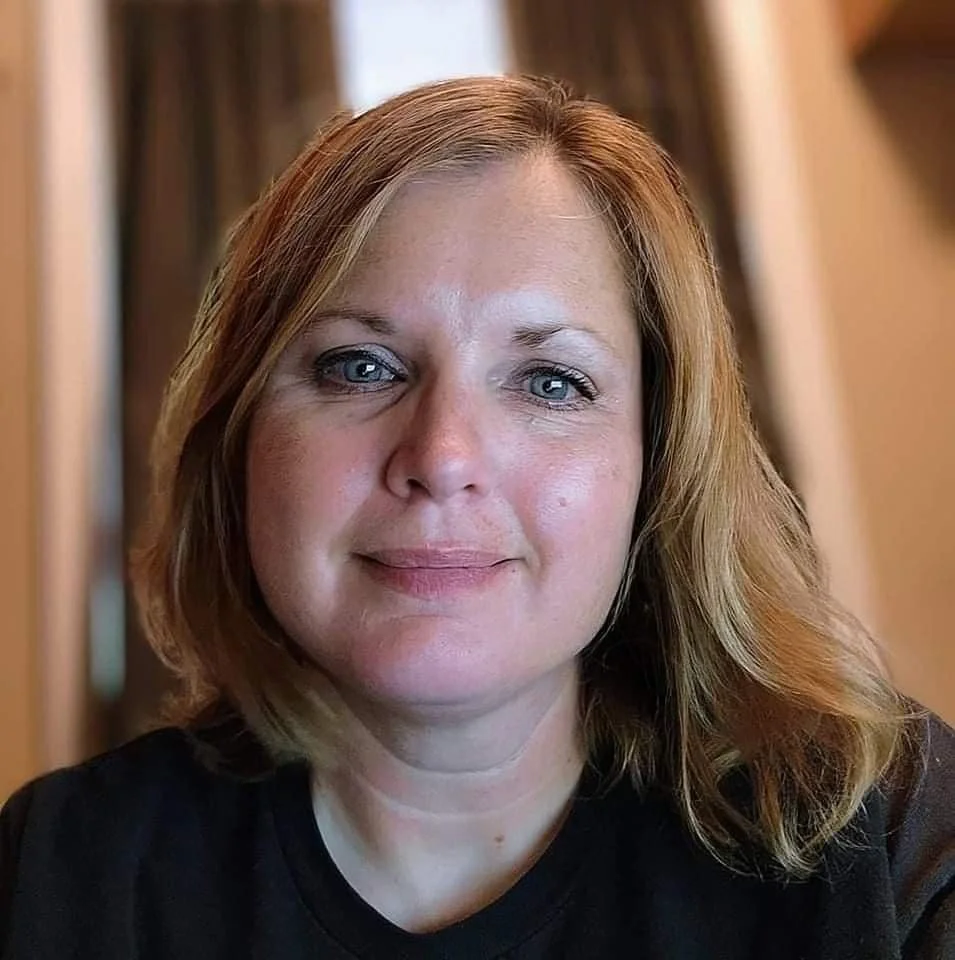
Lori is a Certified Trauma Care Practitioner (CTCP) based in Tennessee. For more than four years, she has walked alongside others in their healing with steadiness, compassion, and deep respect for their stories. Her work is shaped by her own lived experience of religious trauma, adoption, and the long journey of coming home to herself. Lori is passionate about creating space where people can reconnect with their voice, their body, and their sense of belonging.
Disclaimer:
The views, thoughts, and opinions expressed in guest blog posts are those of the individual authors and do not necessarily reflect the positions of the Religious Trauma Network. We recognize that each person’s healing journey is unique, personal, and courageous. The stories shared here belong solely to the contributors, and their experiences, perspectives, and advice may not apply to everyone. We encourage readers to honor their own paths and seek professional support as needed.