
When Politics and Faith Became the Same Thing
by Allison Winstead
"But Dad, he's a Democrat!"
"Yeah, but he's a good Democrat."
This exchange occurred somewhere in my early childhood. I was probably 7 or 8 years old. My parents had taken my older sister and I to the Oklahoma State Capitol for a "field trip" of sorts where we were introduced to both our state Representative and state Senator. Hands were shaken, photos were taken, and at some point I realized that our Senator was a Democrat, prompting the incredulous statement I made to my father.
Some of my earliest memories are attending Republican Party meetings and events with my parents, both of whom were heavily involved from the time I was a young child all the way through my adulthood. The culture of the 1980s and 90s "Moral Majority" heavily permeated my childhood and adolescence.
I knew Lee Greenwood's "God Bless the USA" as well as my ABCs. I knew who Rush Limbaugh was. I knew that you stood up when the American Flag was presented, and you placed your hand on your heart, and if you had a hat on, you took it off. I knew abortion was bad, taxes were theft, and America was superior. And I knew if I believed exactly like my parents, they would be very happy with and proud of me.
Their political beliefs pushed the idea that public education should not exist and that the federal government should have nothing to do with creating educational opportunities for American children. This added an additional layer to the bubble I was raised in politically and religiously when my parents decided to homeschool both my sister and me.
The church where I spent my most formative childhood years was planted by what are known in Evangelical circles as "home missionaries." Unlike foreign missionaries who spent their time in other countries, home missionaries focused on U.S. based ministries, many of which involved starting new churches.
My dad met the pastor of one of these new churches at a Republican meeting, and it was in that small congregation that I became a full-fledged, born-again Christian at 7 years old, baptized while the church stage was flanked by the American flag on one side and the Christian flag on the other.
In many ways, in my young mind, church and politics overlapped and bore many similarities. Republican events almost always involved prayer. Songs about God. Men standing behind podiums and speaking for long periods of time about things I didn't understand. Both were to be taken seriously. But, I will say, I was taught by my father to question more of what I was told at church than to question what I might have picked up through immersion in his conservative circles.
When I think back to the conversation where I questioned why we had just had a photo made with a Democrat, I wonder how, at such a young age and with such limited understanding, I could have already implemented such a binary mindset of Republican = Good vs. Democrat = Bad.
And while I certainly remember getting that idea from things my dad said, jokes I heard, and the rhetoric that often surrounded me, the true us/them mentality was cemented in the walls of the Baptist Church.
It was in the church that I begin to be taught the tenets of chaff and wheat, Christian and "wordly", holy and unholy, moral and immoral.
When I was 28, I went back to college to finish the Bachelor's Degree I had not completed after high school. I chose a private, Presbyterian university, and one of the very first classes that was required involved both lectures and open class discussions on defending our faith. And while a certain set of beliefs was certainly pushed through the curriculum of this school, there was room
for questioning there that I had not been afforded before. My critical thinking began to spark and sputter to life in new and profound ways.
I had also begun to write, blogging publicly and connecting with people who were very different than myself and how I had been raised. I listened to them. I reflected on their points of view.
One of the largest fractures in my religious foundation came through the last Baptist church of which I was a member. I had given countless hours of my time, my tears, my money, and my soul into that church, and yet I began to see the same patterns of stagnancy I had always seen in other churches. A reluctance to consider any other approaches to ministry or the way finances could be used to help others.
This tiny little country church had nearly $100,000 in savings, and it was like pulling teeth to get a majority vote to assist a family in the community recovering from a house fire, or a person with devastating illness, or to even put money into projects that could have benefitted growth and outreach efforts on a larger scale to bring people into the fold.
One of the final straws for me came when one of our members wanted to put some political signage on the lawn in front of the church, next to a busy local highway.
Thankfully, and to his credit, the pastor squelched that proposal but not before I explained my very strong concerns about our church crossing that line. I strongly believed that it was our calling to be a place of invitation to the hurting, the downtrodden, not an advertisement for political propaganda. I wish I could say this was an isolated incident, but the reality is undeniable: the weaponization of Christianity for politics exists from small country congregations to large mega-churches. I firmly believe it is finally recognizing that, by staying involved in those circles, I was complicit in that weaponization, whether I agreed with it or not. Not only that, I was raising my young daughter in it as well. I was also teaching children of other people within the church. How could I continue to do that when my own convictions were starting to unravel?
My politics were shifting. As I met new people and learned new things and listened to more individuals who didn't look like I did, love like I did, and think like I did, I began to see just how small I had kept my world. And how small it had been kept for me for most of my life. On purpose.
For several years following my departure from the Protestant church, I found a home within the Episcopal faith and if I had to identify myself with any "denomination" I would still hold to that. However, I am learning that the deconstruction of false/harmful religious and/or political teaching and influence is a long and arduous journey. There are days I come closer to atheism than faith and for someone whose faith and spiritual life was of such importance through most of their life, this is unfamiliar territory. Often lonely, especially in a red state with a church on every corner.
I have talked at length to a close relative of mine who has had a transformative spiritual life and is one of only a handful of people with whom I can share these kinds of conversations. Her perspective is not one of bitterness over her past religious experience but gratitude for what it taught her.
I am still making peace with mine.
Where I often struggle the most is realizing just how manipulative both political and religious propaganda are and how both are, more often than not, ultimately about control, power and greed.
There is a level of mourning that I have experienced in losing the spirituality of my youth. I often miss the simplicity of it. The "ignorance is bliss" factor. The absolutes that once seemed so certain but now exist in perpetual gray areas. The shift in my political and spiritual beliefs have, for better or worse, also affected many of my personal relationships. In some instances, it has drawn me close to people with whom I was once estranged or at least given us the first common ground we've had in decades. On the other hand, the changes in my beliefs and my outspokenness about it nearly cost me one of my oldest friends and has cost me more than a few relatives, former coworkers, and acquaintances.
But, in some great twist of irony, I often find peace these days in quotes often used in religious contexts - like the one attributed to William Sparrow, “Seek the truth come whence it may, cost what it will," or the words attributed to Jesus in the gospel of John, "You shall know the truth and the truth will set you free."
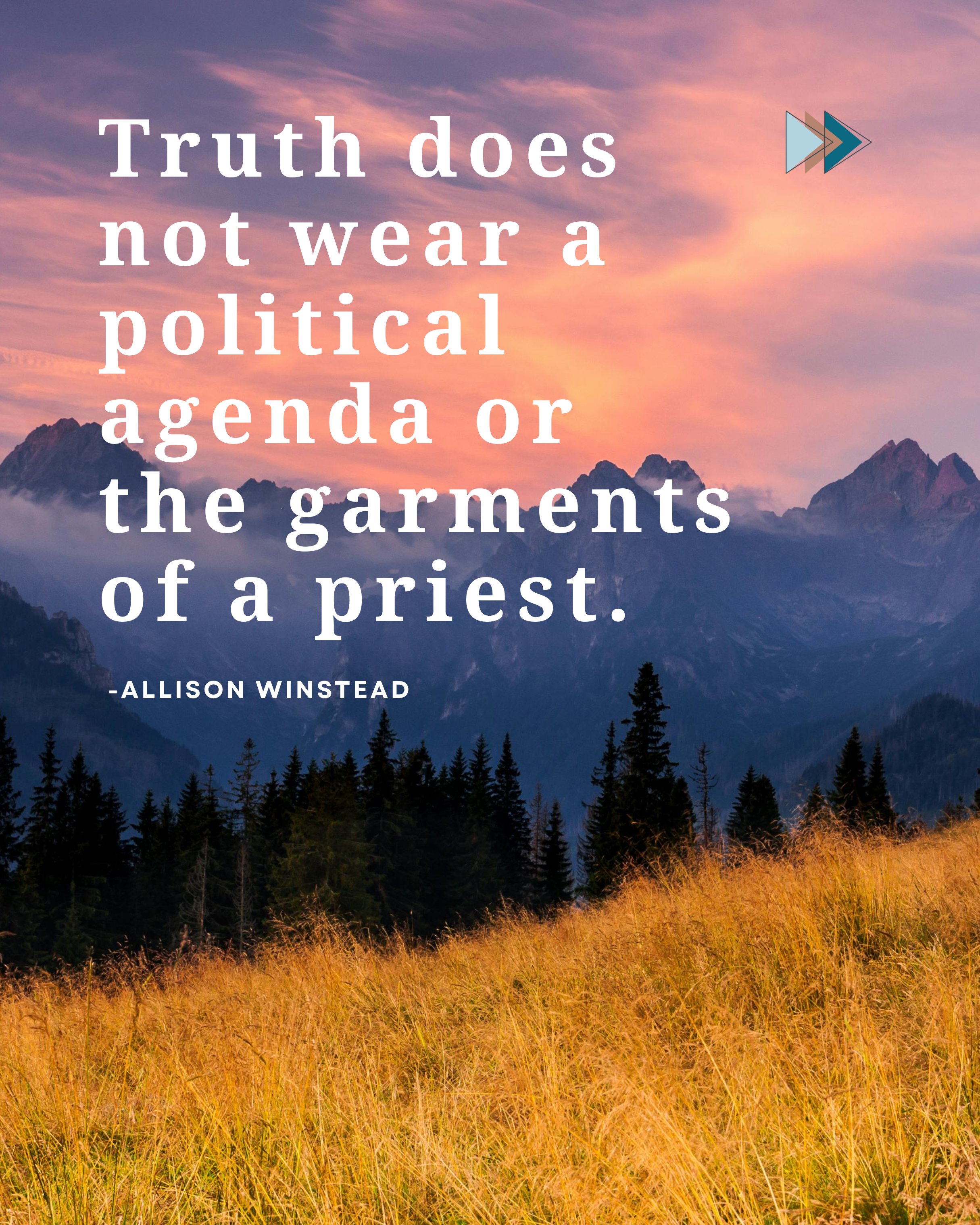
Truth does not wear a political agenda or the garments of a priest. It has a cost. The search for it can be long and lonely. And still, there is freedom in the journey.
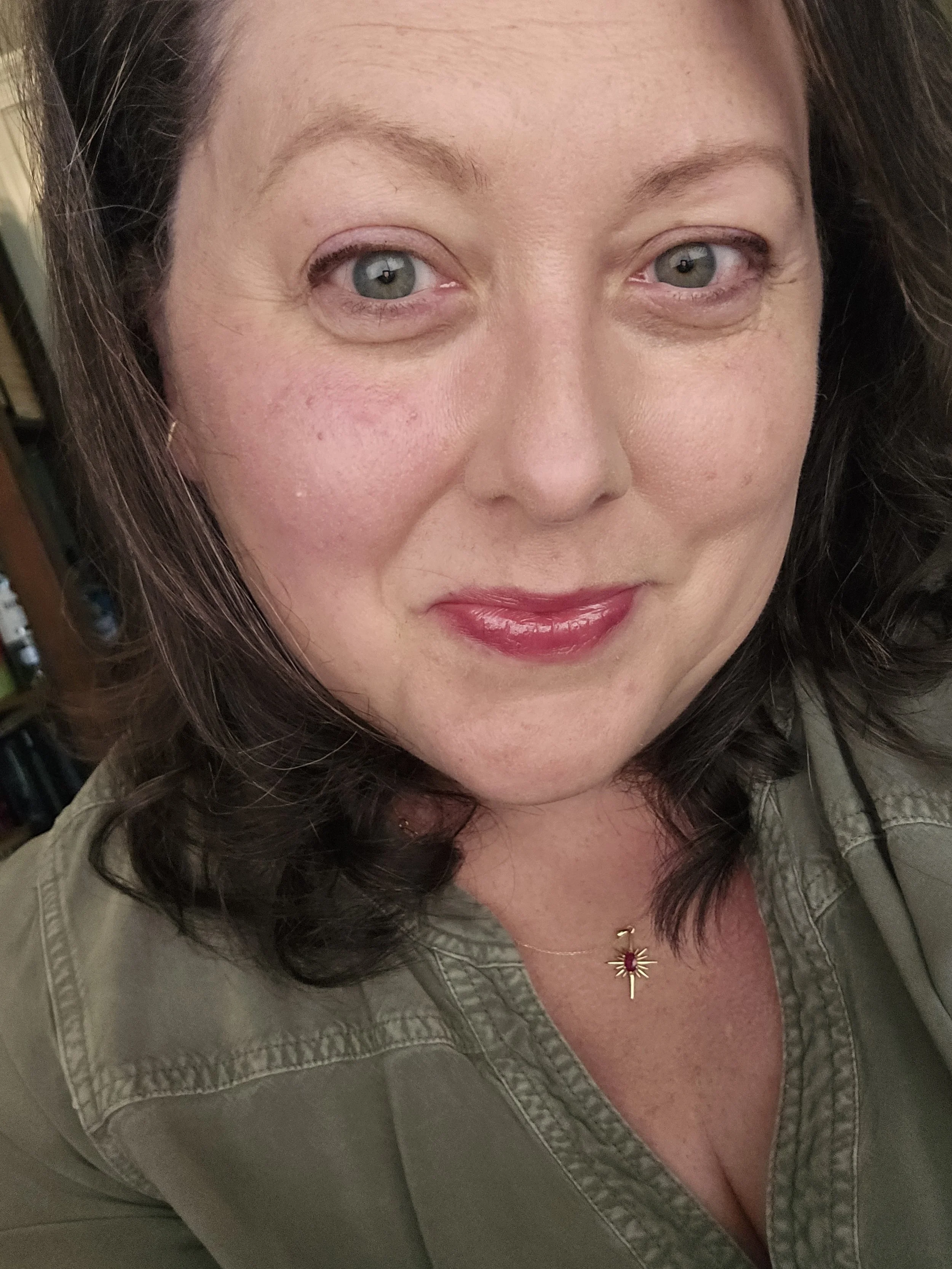
About the Guest Author:
Allison Winstead is a Mississippi native. She has been writing for over 20 years and publishes largely personal essays and poetry on her blog. The subject of religious trauma and deconstruction is of deeply personal importance to Allison and she appreciates spaces and discussions where those walking the same path can connect and support one another.
Disclaimer:
The views, thoughts, and opinions expressed in guest blog posts are those of the individual authors and do not necessarily reflect the positions of the Religious Trauma Network. We recognize that each person’s healing journey is unique, personal, and courageous. The stories shared here belong solely to the contributors, and their experiences, perspectives, and advice may not apply to everyone. We encourage readers to honor their own paths and seek professional support as needed.